Polish wedding traditions: what to expect as a guest
Invited to a Polish wedding, or marrying into a Polish family? Expect a long party, a lot of food and a few customs that can surprise guests from abroad. Most of them are easy to join in once you know what's happening.
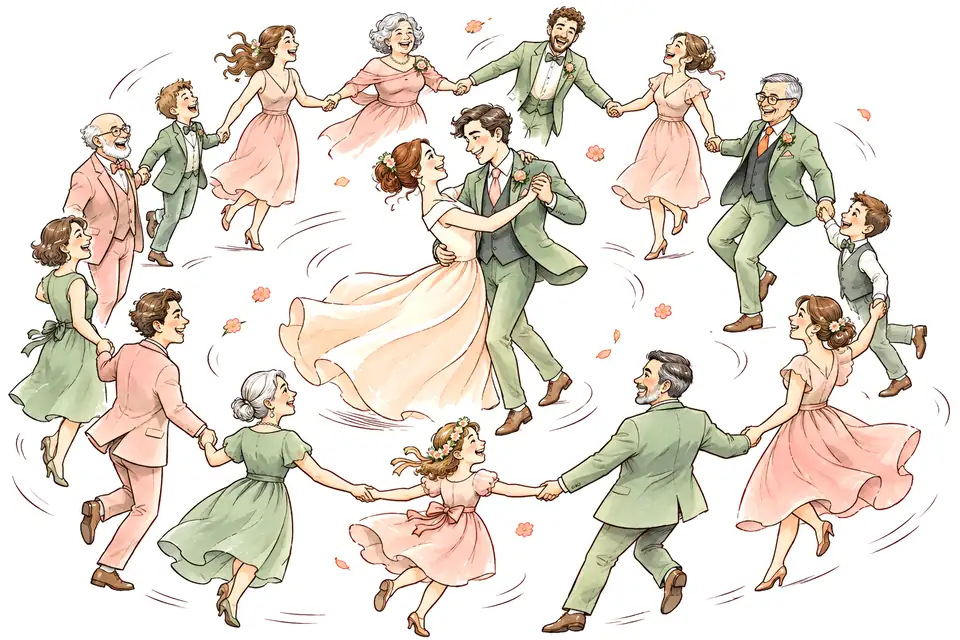
Here are the traditions you are most likely to see. Families and regions differ, and many couples today keep only some of them.
Bread and salt
When the couple arrives at the reception, their parents often welcome them with bread and salt — a wish that they never go hungry and face life's hardships together. Some families add two glasses, one with vodka and one with water, and joke that whoever picks the vodka will lead the home.
“Sto lat” and “Gorzko, gorzko!”
“Sto lat” (“a hundred years”) is the song Poles sing for birthdays and toasts; at a wedding you'll hear it many times. When guests chant “Gorzko, gorzko!” (“bitter, bitter!”), they are asking the couple to kiss and make the drink sweet again. Join in — it's expected.
Food, toasts and a long night
A Polish reception usually means several hot courses through the night, not one dinner, with cakes and cold dishes in between. Toasts are frequent; it's fine to sip, or to toast with something other than vodka.
Oczepiny
Around midnight many weddings have oczepiny: the bride's veil is removed, symbolically marking her new role, followed by the bouquet and bow-tie toss and often games led by the host (wodzirej). Many couples now shorten oczepiny or skip the games.
Wedding gates
In some towns and villages, neighbours set up a “brama” (gate) on the road to the venue, and the couple “pays” to pass with vodka or sweets. It's a good-humoured custom and a sign the community is celebrating with them.
Poprawiny: the day after
Many Polish weddings continue the next day with poprawiny, a more relaxed party for close family and friends. If you're invited, it's a great chance to get to know the family in a calmer setting.
Tips for guests from abroad
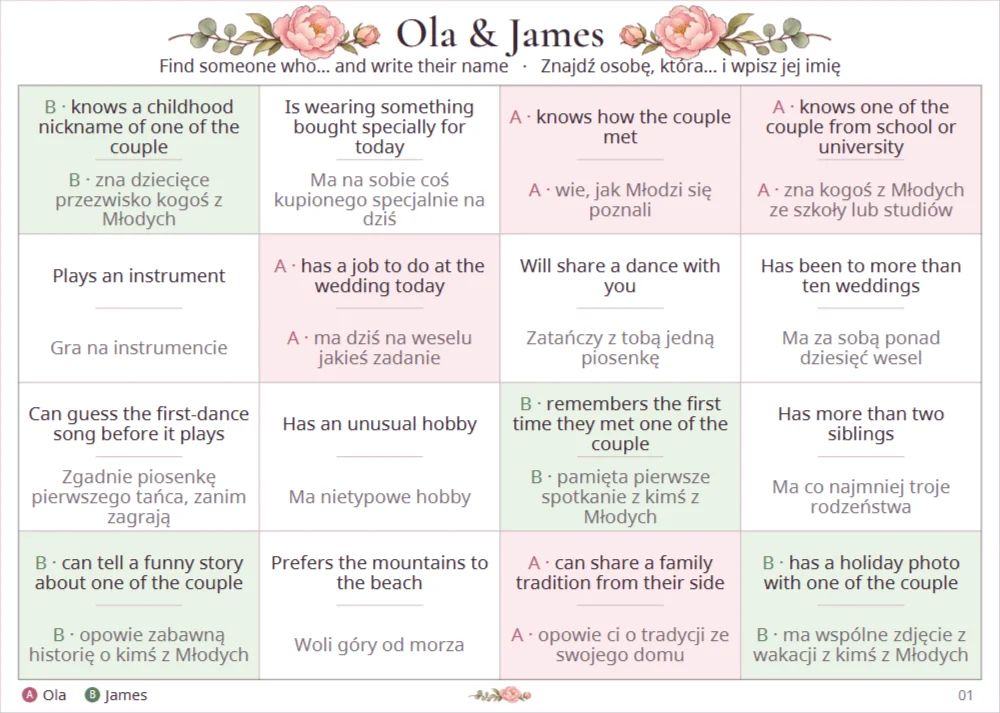
Pace yourself — the party often lasts until the early morning. Learn “Sto lat” and “na zdrowie” (cheers). If there's a language barrier, games at the tables help: bilingual “Find someone who…” cards, with every field in Polish and English, give both families an easy way to start talking.
Bilingual cards for a Polish–English wedding
Every field in Polish and English, and a different card for every guest. You can download a sample card before you buy.
Create your cards