Bilingual wedding, step by step: two families, two languages
A wedding where two languages meet is double the joy and a bit more planning. Some guests won't understand the speeches, the menu or the DJ's announcements unless you plan for it.
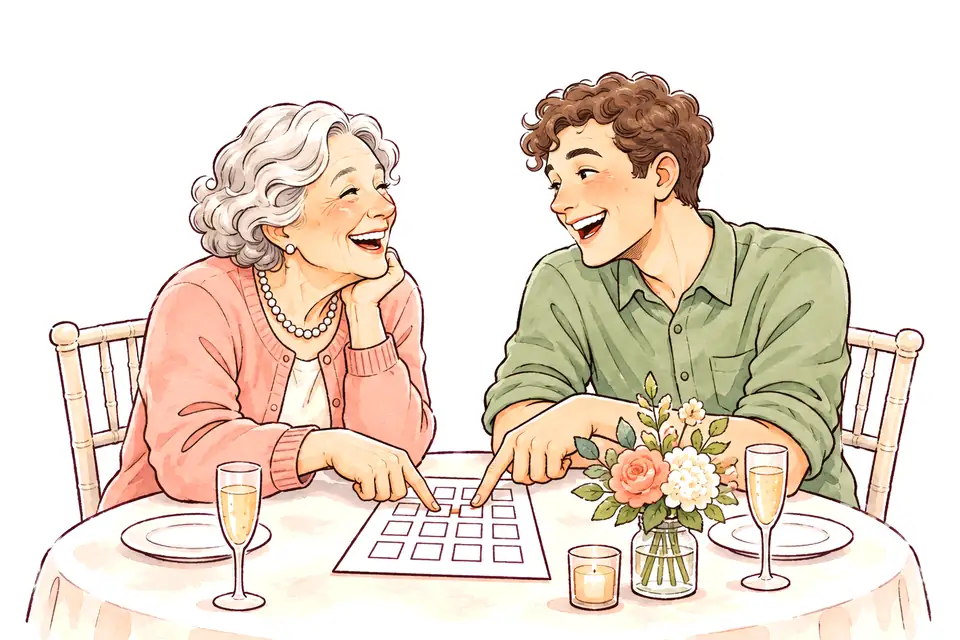
Here are the key decisions in the order they usually come up — from invitations to games at the tables.
1. Invitations and guest information
Make the invitations bilingual — on one card or in two versions. Guests from abroad will appreciate extra information: travel, accommodation, local customs and the dress code.
2. The ceremony
At a civil ceremony, someone who doesn't speak the official language usually needs an interpreter. Check the requirements with the registry office or your officiant well in advance.
A short printed summary of the ceremony in the second language lets guests follow what is happening.
3. Speeches and announcements
Speeches can switch between the two languages or come with a short summary. Keep the DJ's or host's announcements short and in both languages. Music from both countries means everyone knows the words at some point.
4. Menu and small signs
The menu, seating chart, order of the day and dessert-table labels in both languages. Small details that spare guests from abroad from asking all the time.
5. Seating plan: interpreters by choice
At mixed tables, seat bilingual guests next to those who speak only one of the languages. But don't leave the guests from abroad alone at one table — that's the quickest route to two separate weddings in one room.
6. Games that need no interpreter
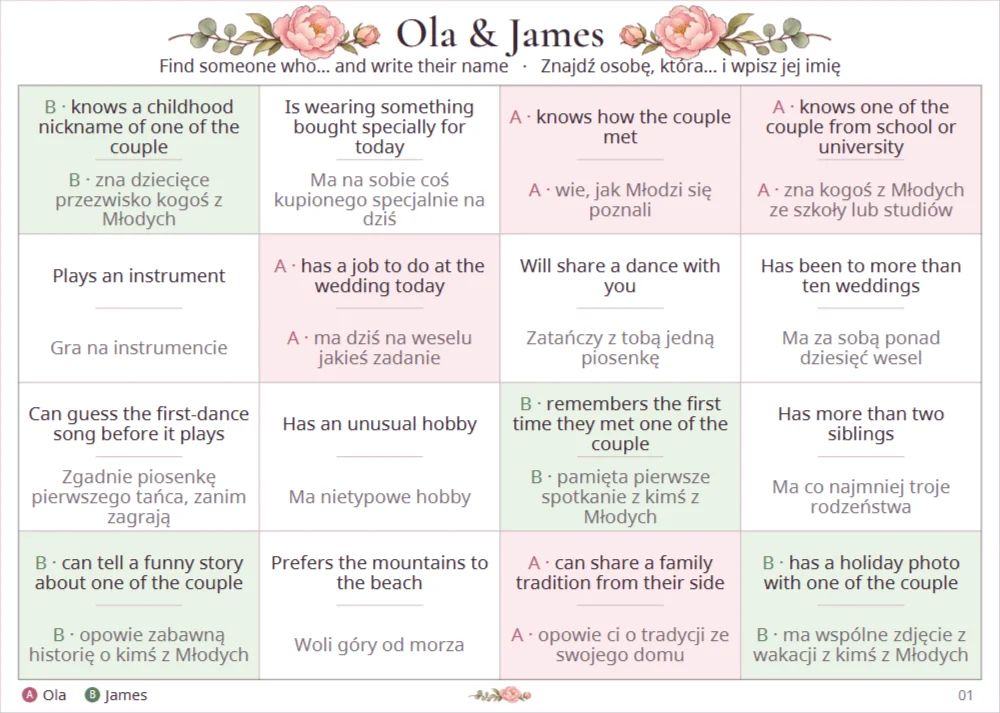
Doing things together works across languages: dancing, photos, games at the tables. Bilingual “Find someone who…” cards work well: every field holds the same prompt in both languages, so everyone plays together.
Prompts like “can teach you to say ‘I love you’ in another language” or “will say ‘cheers’ with you in another language” turn the language gap into a conversation.
7. Traditions from both sides
Pick one or two traditions from each culture and explain them briefly — in the programme, on a sign or in an announcement. Guests happily join in customs they understand.
Bilingual cards for your guests
Choose two languages in the creator — every prompt appears in both versions in the same field. You can download a sample card before you buy.
Create your cards