How to bring two families together at a wedding
It’s easier to make introductions over lunch than in a busy reception room. Start with the people closest to the couple, then give guests a reason to say hello beyond their own table.
At a glance
- Introduce the parents over lunch or at a small engagement gathering before the wedding.
- Keep a familiar face at each table and seat small groups from both families together where they share an interest or a language.
- Make one toast everyone can join and offer an optional game that gets people talking across tables.
Before the wedding: start with the parents
Invite the parents to lunch, or introduce them early at a small engagement get-together. Share a detail that gives people a way in: two guests volunteer at a community garden, for example, or grew up in the same town.
If meeting in person isn’t practical, start an opt-in group chat for family photos. A caption with names and how everyone knows the couple gives guests a few faces to recognise on the day. Ask before sharing someone else’s photo.
Build bridges into the seating plan
Keep friends or relatives together in small groups, then look for promising neighbours across the two sides. A friend who knows both families can introduce the table, but a shared interest or language can do just as much. Don’t seat one person among strangers just to fill a space.
Give both sides a moment at the reception
If people on both sides want to speak, ask each for a short memory and end with one toast to the couple. Guests can raise whatever they’re drinking. Ask a friend to make a few introductions during the drinks reception, when people aren’t tied to assigned seats.
Give guests a reason to visit another table
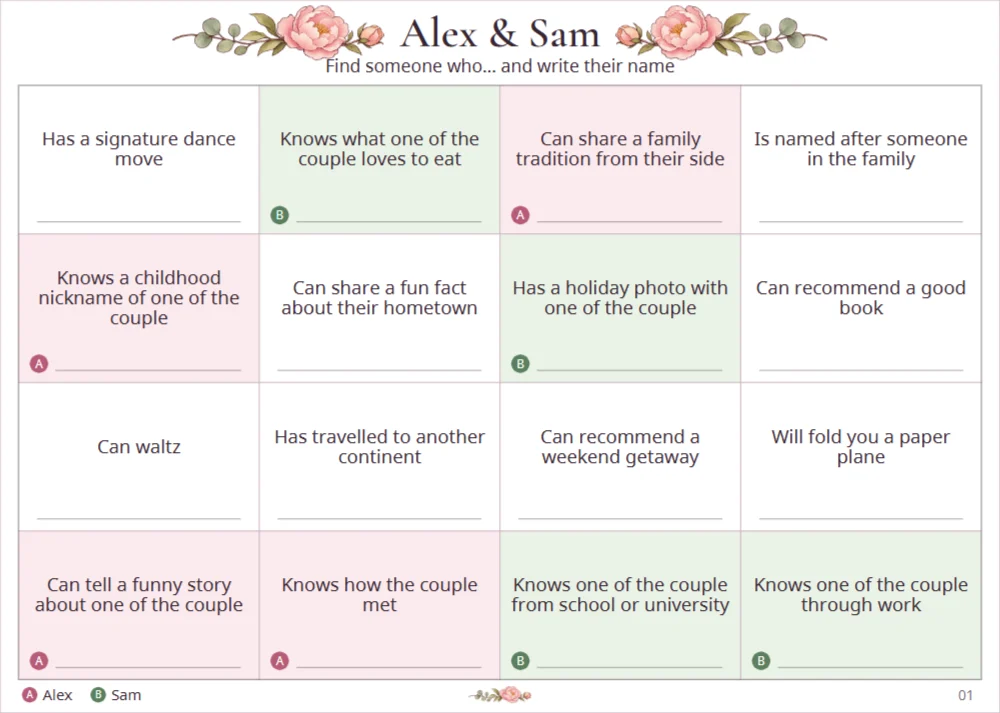
Try a matching-pairs game with symbols placed at different tables, or invite people who have just met to take a photo together if they’d like. ‘Find someone who…’ with sides A and B is another option: the labels point guests towards people connected to either side of the couple. Use prompts that lead to a story, such as ‘…can tell you how they first heard about the wedding’.
When the families have different traditions or languages
Ask which traditions matter to each family. Before a moment that might be unfamiliar, explain what’s about to happen and how guests can join in if they want to. Give those announcements in both languages where needed.
Plan the announcements and table materials for a bilingual wedding.
Frequently asked questions
How should our parents meet for the first time before the wedding?
Arrange coffee or a meal somewhere quiet. Introduce everyone by name and mention something they might enjoy talking about; save decisions about the wedding for another conversation.
Should I mix both families on my wedding seating chart?
Mix small groups rather than splitting up everyone who knows each other. Try pairing groups with a shared interest, and make sure each guest has someone familiar nearby.
What can we do to get the two families talking without putting anyone on the spot?
Leave cards with matching symbols at different tables. Guests who want to join can find their match and ask how they know the couple, with no microphone or performance.
How can we introduce our families if they don’t speak the same language?
Ask a willing bilingual guest to help with introductions and give key announcements in both languages. Seat each guest near someone they can talk to directly.
If you choose a conversation game
Make ‘Find someone who…’ cards with sides A and B, and download a sample before buying.
Create cards